
Course Summary
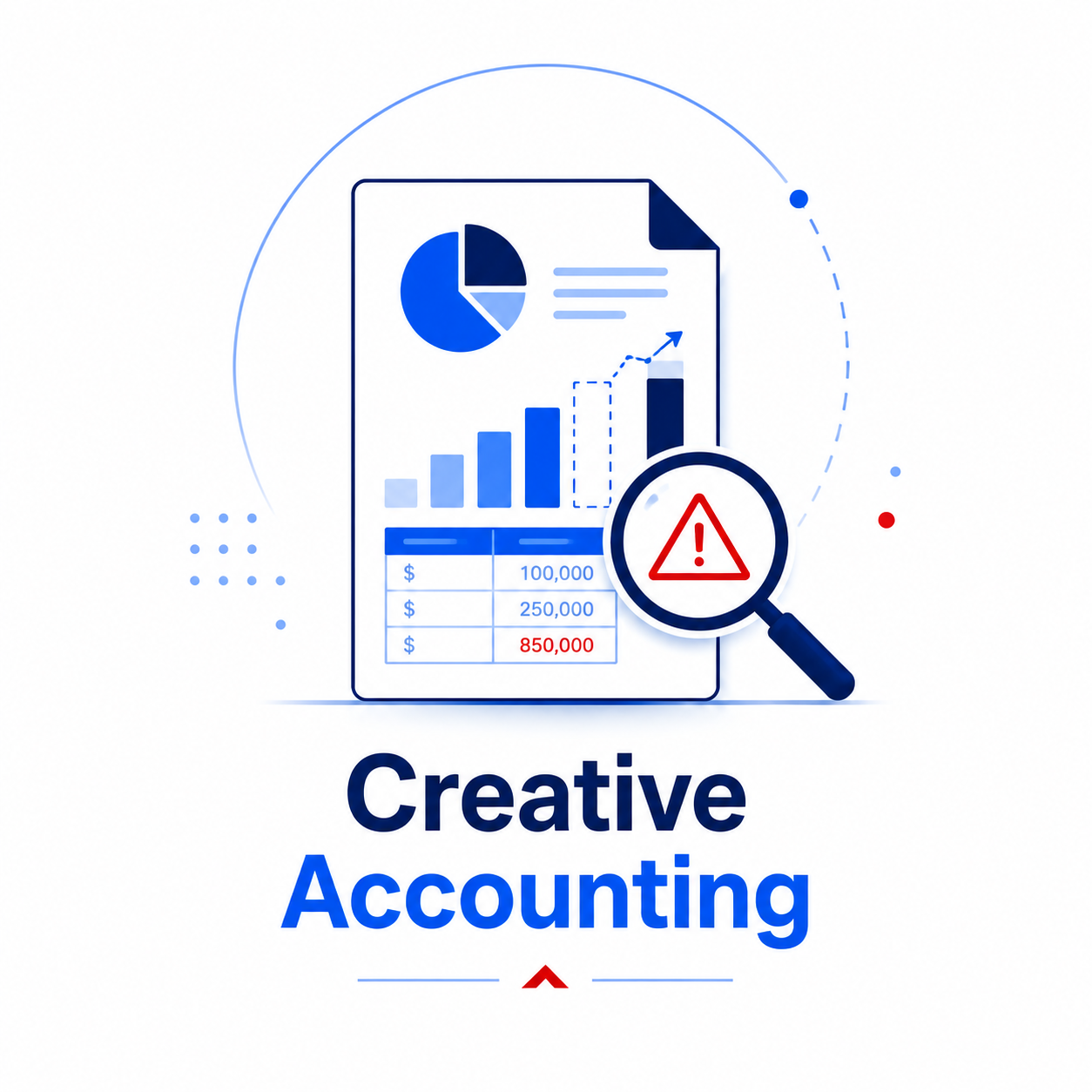
Financial misstatements rarely begin as obvious fraud. They often start with small accounting choices, aggressive assumptions or reporting practices that appear defensible until the pattern becomes much harder to ignore.
This two day course helps finance, audit, compliance and risk professionals strengthen their ability to identify those warning signs earlier. Participants will examine how creative accounting develops, why financial manipulation occurs and how forensic professionals assess financial reports for inconsistencies, unusual patterns and questionable reporting practices.
The course combines financial analysis techniques with real world case investigations. Participants will work through methods such as horizontal and vertical analysis, ratio testing, journal entry review, revenue recognition analysis and cash flow assessment. Around 15 accounting scandals and financial collapses may be examined across the two days, including international and Malaysian cases, depending on participant needs and learning priorities.
Day 1 builds the foundation by examining why creative accounting happens and how common manipulation techniques can be detected. Day 2 moves into more complex indicators, including suspicious cash flows, mismatches between operational and financial performance, non GAAP reporting and the role of auditors, regulators, whistleblowers, journalists, short sellers and technology in uncovering financial misconduct.
Participants leave with stronger professional scepticism, practical detection techniques and a clearer understanding of the financial red flags that may warrant deeper investigation.
Frequently Asked Questions
What is this course about?
This course is about creative accounting, financial reporting fraud and the practical techniques used to identify warning signs in financial reports.
Participants will learn how accounting manipulation can develop, what motivates organisations or individuals to distort financial information and how professionals use analytical techniques to detect irregularities.
The course also examines how emerging technologies such as AI, digital reporting, blockchain and cryptocurrencies may influence both fraud prevention and financial manipulation.
What are the learning outcomes?
By the end of this course, participants will be able to:
- Understand common techniques used in creative accounting and financial reporting fraud
- Recognise the motivations and pressures that can lead to financial manipulation
- Apply analytical techniques used to detect accounting irregularities
- Identify red flags associated with manipulation and fraud
- Strengthen professional scepticism and pattern recognition
- Examine financial information using horizontal and vertical analysis
- Use ratio analysis, journal entry review and revenue recognition analysis more effectively
- Recognise suspicious cash flow and non GAAP reporting patterns
- Understand how different stakeholders contribute to uncovering financial misconduct
- Assess how AI, blockchain, digital reporting and other technologies may prevent or enable creative accounting
These outcomes are drawn from the objectives and course agenda in the brochure.
What are the course modules?
The course covers four main learning areas across two days:
- Creative Accounting and Fraud: Motivation and Impacts
- Detecting Creative Accounting: Methods and Examples
- Regulators, Auditors, Journalists, Whistleblowers, Short Sellers and Technology
- Case Study Investigation
Participants will examine practical detection methods including horizontal and vertical analysis, ratio testing, journal entry reviews, revenue recognition analysis, suspicious cash flow patterns and manipulation of non GAAP metrics.
Case investigations are used throughout the course to show how financial misconduct developed, which warning signs were missed and how the irregularities were ultimately uncovered.
Who should attend this course?
This course is suitable for intermediate and experienced professionals involved in financial reporting, audit, governance, risk and financial analysis, including:
- Internal Auditors
- External Auditors
- Forensic Accountants
- Chief Financial Officers
- Financial Controllers
- Compliance Officers
- Regulators and Enforcement Professionals
- Financial Analysts
- Credit Risk Professionals
- Heads of Risk
- Heads of Strategy
- Heads of Governance
- Accountants with relevant audit, financial reporting or analytical experience
The brochure also identifies investigative journalists as a relevant audience where their work involves analysing corporate financial information and investigating financial misconduct.
Who is the lead trainer?

Thomas Egan
Financial Reporting, Accounting Standards and ESG Reporting Trainer
The lead trainer is Thomas Egan. Thomas brings over 30 years of global experience in designing and delivering accounting and finance training programmes for professionals and organisations. He is a member of ISCA, CPA Australia and ACCA, and is also a licensed US CPA. His professional background includes 25 years in technical accounting roles across a Big 4 firm, an international bank and advisory work for the aviation sector. He has also served on committees involved in accounting standards, financial reporting and XBRL.
Thomas holds a master’s degree in accounting from the University of Wisconsin-Madison and a Postgraduate Diploma in Strategic Finance from the University of Oxford. He also holds the CFA Certificate in ESG Investing, strengthening his expertise across sustainability reporting and ESG-related financial disclosures. With his technical depth and international experience, Thomas helps participants translate complex reporting requirements into practical application for finance, accounting, audit and corporate reporting teams.
How long is this course?
This is a two day corporate training course.
What are the date and venue details?
- The public training for this course will be held on 24-25 November 2026 at the Majestic Hotel Kuala Lumpur.
- This course is also available for in house training.
How much is the course fee?
- For public training, the course fee is RM3,500 per participant. The fee includes applicable taxes and one night stay at the event hotel. A group fee of RM3,150 per participant is available for registrations of three participants and above.
- For in house training, fees are quoted based on the programme scope, number of participants, delivery format and customisation requirements.
Is this course HRD Corp claimable?
- For public training, this course is 100% HRD Corp claimable for eligible employers, subject to HRD Corp approval and the applicable claim process.
- For in house training, HRD Corp claimability depends on employer eligibility, course approval and submission requirements.
How do I learn more or register?
- To learn more, download the course brochure from the right panel.
- For public course registration, complete the registration form in the brochure and email it to registration@skill-lyft.com.
- For in house training enquiries, contact Skill-Lyft and our team will advise on the scope, customisation, dates and the next steps.
- Last updated: September 2026